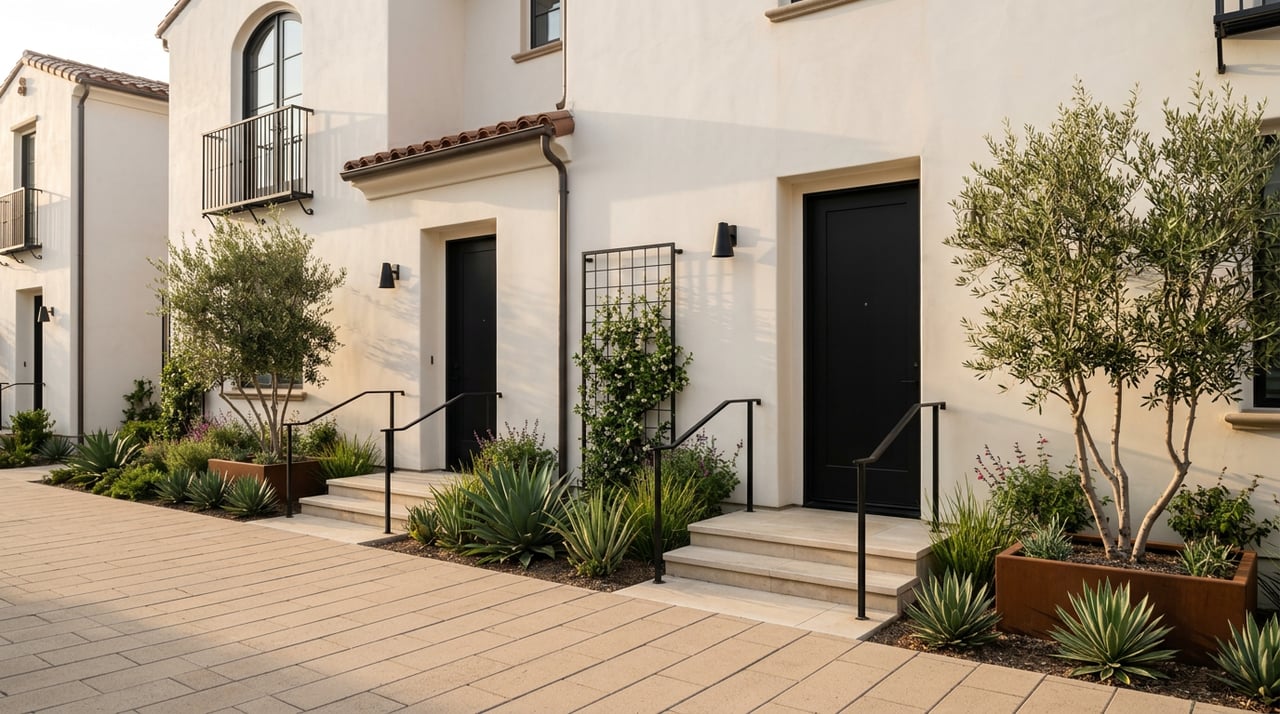
You want the space and convenience of Orange County living without the single-family price tag. Condos and townhomes in Tustin can be a smart path into a well-located neighborhood, close to jobs, shopping, parks, and transit. In this guide, you’ll learn where these homes cluster in Tustin, what prices and HOA fees to expect, the HOA laws and disclosures that matter, how lenders view these properties, and a clear checklist to shop with confidence. Let’s dive in.
Where to find condos and townhomes
Old Town Tustin
Old Town sits near the center of the city and offers older low-rise condo communities and small planned developments. You’ll find walkable access to restaurants and local shops. Homes here often provide some of Tustin’s more affordable attached options by trade-off of older construction and varied HOA sizes.
Tustin Legacy
Tustin Legacy is the master-planned redevelopment of the former MCAS Tustin. It includes newer condo and townhome phases, parks, and retail such as The District and the Village at Tustin Legacy. Expect modern floor plans, attached garages, and community amenities in many neighborhoods, as outlined by the city’s overview of Tustin Legacy planning and features.
Tustin Ranch and 92782 pockets
Tustin Ranch and nearby planned areas feature townhomes and condo communities, sometimes gated and often near golf and open space. Many neighborhoods here have layered fees, such as a master association plus a sub-association. Product quality and amenities tend to be higher, which can influence monthly HOA costs.
Price and HOA fee expectations
Citywide, Tustin’s overall housing prices sit in a higher Orange County band as of early 2026. Attached homes usually trade meaningfully below most single-family homes in the city, yet they remain competitive compared to many inland markets. In practice, you can find smaller, older condos at lower price points and larger or newer townhomes closer to the city’s overall median levels. Always confirm current pricing with fresh comps because medians and micro-trends shift month to month.
HOA fees vary with age, amenities, and association structure. Many Tustin condos and townhomes fall in a common monthly range for standard amenities, while amenity-rich or gated communities can run higher. Fees typically reflect pools, gyms, security, landscaping, reserves, and master insurance. If there is a master association plus a sub-association, budget for both lines in your monthly payment.
Condo vs townhome: what you actually own
In a typical condominium, you own the interior living space while the HOA maintains the roof, exterior, and shared elements. In a typical townhome, you may own the land under the unit in fee simple and sometimes hold more exterior responsibility, though many townhome HOAs still cover exterior tasks. These differences affect insurance, maintenance planning, and the risk of special assessments. For a quick primer on the distinctions, review this overview of condo versus townhouse ownership basics.
HOA rules and California law to know
California’s Davis–Stirling Common Interest Development Act is the main framework that governs how HOAs operate in condos and townhomes statewide. It controls disclosures, budgets, reserve studies, meetings, document access, and dispute resolution. You can review the full statute text to understand what HOAs must provide and how they must operate under the Davis–Stirling Act.
Recent updates matter too. AB‑130, signed in 2025, revised enforcement procedures and set new limits and requirements that associations must follow. Buyers should not assume an HOA’s older fine schedule is still enforceable without updates. See the bill record for AB‑130’s amendments to HOA enforcement mechanics and a practical explanation of fines and penalties under Davis–Stirling.
Reserves are central. California requires reserve studies with an on-site inspection at least every three years, and boards must disclose reserve summaries annually. The percent funded and the reserve plan are key indicators for both buyers and lenders. Learn what a compliant reserve study includes and how often it must be updated in this summary of California reserve study requirements.
Timing is also important. In California, buyers typically receive a formal HOA disclosure or resale package. These documents often power the lender’s condo review, so any delay in getting them to your lender can slow your loan timeline. The Davis–Stirling framework outlines what owners can request and what HOAs must provide in their statutory obligations.
Financing: make your offer financeable
Condos and many townhomes must pass a project review for conventional loans. Lenders use Fannie Mae’s Condo Project Manager to determine whether a project is eligible, what documentation is required, and whether the condo is warrantable. Ask your lender early about the project’s status and any documentation they need from the HOA. You can learn more about the tool lenders use here: Fannie Mae’s Condo Project Manager.
Agency rules cover reserve funding, delinquency levels, owner-occupancy ratios, insurance, and more. These standards drive whether a project clears a conventional path or requires specialty financing. A good starting point for key underwriting considerations is Fannie Mae’s condo project review guidance.
If a project is not eligible for conventional or agency financing, your options may include a larger down payment or a portfolio loan with different pricing. Plan for this possibility before you write an offer, especially if the HOA is older, has limited reserves, or is involved in litigation.
Insurance is another factor. Your lender and insurer will want to see the HOA’s master policy to confirm what the association covers and what your unit policy must cover. Some masters are “walls-in,” others are “all-in,” and deductible amounts can be significant. For a quick explainer on how condo insurance differs from standard homeowners policies, review this overview of condo vs homeowners insurance basics.
Finally, any already-approved or probable special assessment will be reviewed by your lender. Expect questions about the purpose, amount, and timing. In some cases, you may be required to pay the assessment or set aside reserves at closing.
Total cost and resale in Tustin
Look beyond the purchase price. Your true monthly cost includes mortgage, HOA fees, insurance, and property taxes. In some newer master-planned areas of Tustin, certain neighborhoods also carry Mello–Roos special taxes that fund infrastructure. Verify parcel-level taxes on the county bill so you can budget accurately.
For resale, think about your future buyer pool. Newer townhomes in Tustin Legacy tend to attract buyers who want modern layouts and proximity to retail and parks. Older condos in Old Town may appeal to downsizers or first-time buyers who value walkability. Financing eligibility, reserve health, and any active litigation can widen or narrow that pool, so include those factors in your long-term outlook.
Step-by-step Tustin buyer checklist
Get the HOA package early. Ask the listing agent for the HOA name and management contact, then request the CC&Rs, bylaws, budget, reserve study, insurance declarations, meeting minutes, and any special assessment notices.
Confirm project eligibility with your lender. Ask whether the HOA is eligible through Fannie Mae’s systems and what documentation is needed. Lenders rely on Condo Project Manager for conventional approvals.
Review reserves. Check the study date and the percent funded. If the study is older than three years or reserves are low, flag it for deeper review. See the state’s reserve study requirements.
Ask for delinquency and litigation summaries. Higher delinquency or material litigation can limit conventional financing. Lenders follow agency thresholds and documentation needs explained in Fannie Mae’s condo review guidance.
Identify special assessments. Confirm amounts, timing, and who pays at closing. Lenders will underwrite these obligations as part of the project review.
Align insurance coverage. Obtain the HOA master policy declarations so your insurance agent can size your HO‑6 correctly. This condo insurance overview explains typical coverage splits.
Verify property taxes. Confirm the base tax and any Mello–Roos or special assessments on the parcel. Add these to your monthly budget before you set your offer price.
Start the lender questionnaire early. If your lender needs a condo questionnaire or project documents, deliver them as soon as you go under contract so agency reviews can finish well before contingency deadlines. Refer to Fannie Mae’s project review process for what underwriters typically require.
How a local advisor can help
Buying into an HOA community is as much about document review and financing alignment as it is about the property tour. A hands-on advisor helps you compare neighborhoods by total cost, spots red flags in reserve studies and insurance, and keeps lender documentation moving so your loan clears on time. That combination matters in Tustin, where product age, layered associations, and eligibility rules can differ from one block to the next.
When you are ready to explore condos and townhomes across Old Town, Tustin Legacy, and Tustin Ranch, reach out to a senior-level guide who understands HOA paperwork, lender project standards, and Orange County trends. Connect with Jules Granda to align your search, your financing, and your closing timeline.
FAQs
What is the difference between a condo and a townhome in California?
- A condo owner typically owns the interior space while the HOA maintains exteriors and common areas; a townhome is often fee simple, with some exterior duties shifting to the owner, though many townhome HOAs still handle exteriors.
How much are typical HOA fees for Tustin condos and townhomes?
- Many communities fall in a mid-range monthly fee band, with amenity-heavy or gated neighborhoods costing more; always confirm exact amounts, inclusions, and whether there are layered master and sub-association fees.
What HOA documents should I review before buying in Tustin?
- Request CC&Rs, bylaws, rules, budgets and financials, the current reserve study, insurance declarations, meeting minutes, delinquency and litigation summaries, and any approved or proposed special assessments.
What can delay a condo loan approval in Tustin?
- Late HOA resale packages, missing insurance documents, low reserves, high delinquencies, special assessments, or active litigation can trigger extra underwriting and slow your approval.
Are FHA or VA loans possible for Tustin condos or townhomes?
- Yes, if the project meets program rules; some properties may need a single-unit approval or full project approval, so check with your lender early on the specific HOA’s status.
