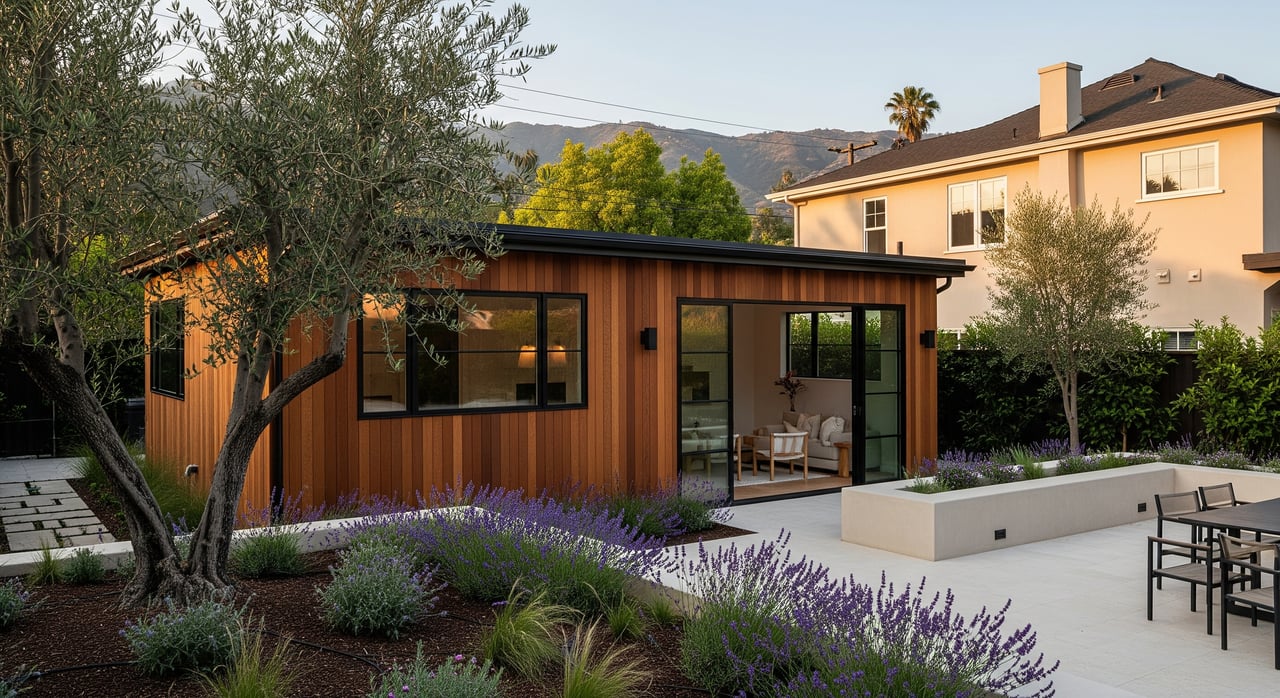
Thinking about adding an ADU to your Pasadena property to create rental income, house family, or boost resale value? You are not alone. ADUs have become one of the most practical ways to add flexible living space in the Los Angeles area while staying within state-backed rules. In this guide, you will learn the essentials for Pasadena homeowners and small investors, including types of ADUs, permits, timelines, costs, parking rules, and how an ADU can affect value. Let’s dive in.
What counts as an ADU in Pasadena
An accessory dwelling unit is a secondary home on the same lot as your main residence. It can be a detached cottage, an attached addition, or a conversion of existing space like a garage. A junior ADU is a smaller unit created within your existing home and typically has a limited kitchen.
Common ADU types you will see in Pasadena:
- Detached backyard ADU
- Attached ADU as a home addition
- Conversion ADU from a garage or accessory structure
- Junior ADU inside the main home
State law requires most cities to allow ADUs in residential zones, but Pasadena still applies objective standards like setbacks, height, and design. That means you have a clear path to approval if you follow the rules.
State rules vs. Pasadena standards
California has passed multiple laws since 2017 that expand where and how ADUs can be built. The state sets the baseline, and cities like Pasadena set objective standards that fit local conditions. Your project will be evaluated ministerially, which means no discretionary hearing if your plans meet the objective rules.
- Junior ADU size: typically up to 500 square feet under state law.
- ADU size: state law has allowed up to 1,200 square feet for many detached units, but cities may set smaller caps within the state framework. Verify Pasadena’s current size, height, and setback standards directly with the city.
- Historic and hillside areas may add steps for safety or design. The baseline state rules still apply, but you should plan for more review.
For the latest city standards and checklists, start with the City of Pasadena Planning and Community Development resources on the City of Pasadena website. For state-level guidance and statute summaries, check the California Department of Housing and Community Development.
Permits and timeline
ADUs that meet the objective standards are reviewed by staff without a public hearing. You will go through planning review, building plan check, and inspections. Prepare for a few rounds of questions if your site is unique.
Ministerial review and decision timing
Many ADU permits fall under a state timeline that requires a decision after the application is deemed complete. A commonly cited benchmark is 60 days for many ADU permits. Timing can vary based on workload and whether your submittal is complete. Confirm Pasadena’s current process and timing at intake.
Typical build timelines after approvals:
- Garage or interior conversion or JADU: about 2 to 6 months
- Small new detached ADU: about 6 to 12 months
- Larger or complex ADU with utility work: about 9 to 18 months or more
Parking and transit exemptions
State law limits how much parking cities can require for ADUs. In many cases, you will not need to add parking if you convert existing space or if the property is near qualifying transit. Properties within a set distance of public transit are commonly exempt. Also, when you convert an existing garage, many jurisdictions cannot require replacement parking because of state protections. Verify how these exemptions apply at your address.
Utilities and impact fees
Detached ADUs often need new or separate utility connections. Expect water, sewer, and electrical coordination. Cities can charge connection or capacity fees, but smaller or conversion ADUs may qualify for reduced fees. You may also encounter school or park fees depending on local rules.
Plan for these steps:
- Confirm whether separate meters are required for your design
- Ask about sewer lateral condition and any replacement needs
- Request a full fee estimate at the permit counter
Historic districts and HOAs
If your property sits in a historic district, you may have added objective design steps. Private covenants from a homeowners association can also limit construction or rentals. You will need to comply with both public requirements and private CC&Rs. When in doubt, consult the HOA documents and walk through your plan with the city.
If your property is outside city limits in an unincorporated pocket, start with Los Angeles County Planning for rules and checklists.
Costs and financing
The cost of an ADU depends on size, site conditions, and finish level. In Pasadena and the broader Los Angeles area, here are typical ranges you can use to budget.
Typical build costs
- Garage or interior conversion: about 40,000 to 150,000 dollars
- Junior ADU within the home: about 20,000 to 80,000 dollars
- Detached, stick-built ADU: about 150,000 to 400,000 dollars or more
- Prefab or modular ADU: starting near 120,000 dollars plus site, utility, and permit costs
Sites with slopes, retaining walls, long utility runs, or sewer upgrades can add substantial cost. Material and labor prices have also been volatile in recent years, so add a contingency.
Soft costs and surprises to budget
- Architectural and engineering plans
- Permit, plan check, and impact or connection fees
- Sewer lateral or electrical service upgrades
- Drainage, grading, retaining walls, and landscaping
- Possible fire sprinklers or other safety measures depending on location
Financing paths to consider
- Cash-out refinance, home equity loan, or HELOC
- Construction loans or ADU-focused products when available
- Conventional investment financing for portfolio owners planning to rent the ADU
- Check for local or county programs that may support ADU development
Choose the option that fits your risk profile and timeline. Ask lenders about draws, rate locks, and how they underwrite projected rental income.
Rental income and returns
ADUs can generate steady monthly rent if designed and priced correctly. Pasadena rents vary by unit size, privacy, parking, and finishes. Pull comps for studios and one-bedroom units near your address and adjust for features like a private entrance or in-unit laundry.
A simple return framework
Run a gross yield on the total project cost, then refine to a net figure. For example, if you invest 250,000 dollars and gross rent is 2,500 dollars per month, you get 30,000 dollars per year. That is a 12 percent simple gross yield. After vacancy, management, maintenance, insurance, property tax changes, and utilities, many owners see lower net yields. A 4 to 8 percent net range is a common planning assumption for ADU investments, but your result will depend on rent, expenses, and financing.
Taxes and insurance to plan for
New construction typically triggers a reassessment for the improvement portion of your home. For how Los Angeles County calculates assessed value on new work, review the Los Angeles County Assessor. Rental income is taxable, and you may be able to deduct certain expenses and depreciation. Update your homeowners or landlord policy so the ADU and rental activity are covered.
Quick feasibility check for your Pasadena lot
Use this short checklist to decide if your site is worth a deeper look:
- Zoning: Is your property in a residential zone that allows ADUs under state law and city code?
- Lot space: Do you have backyard area or an existing garage to convert within setbacks and lot coverage limits?
- Safety access: Can you meet fire access and egress requirements, especially in hillside or wildland interface areas?
- Utilities: Are sewer and water capacity adequate? Will a sewer lateral upgrade be required?
- Terrain: Will grading or retaining walls be needed? How will stormwater be handled?
- Historic or trees: Are there historic protections or protected trees that affect placement?
- HOA rules: Do CC&Rs restrict additional structures or rentals?
- Parking and transit: Are you near qualifying transit or can you meet any required parking?
- Budget and financing: Do you have funds for construction, soft costs, and contingencies?
If most answers are yes, set a planning appointment with the city and start pricing with local architects and builders.
Resale impacts to consider
An ADU can make your home more appealing to a wider buyer pool. Many buyers value a legal, income-ready unit or a flexible space for multigenerational living.
Potential upsides:
- Added value from an income-producing or flexible living space
- A larger audience of buyers, including investors and multigenerational households
- Flexibility to live in one unit and rent the other
Potential cautions:
- Buyers may review tenant history and lease terms, which can affect timing of closing
- Some loans handle properties with ADUs differently, which can affect buyer financing
- Property taxes can rise based on reassessment of the improvement
- Short-term rental rules may limit vacation rental use, which can affect certain buyer goals
Keep thorough records. A fully permitted ADU is more valuable and easier to finance than an unpermitted conversion. Save stamped plans, inspections, and final approvals to present at sale.
Your first three steps in Pasadena
- Start at the permit counter. Bring a site sketch, photos, and a summary of your idea to the City of Pasadena Planning and Community Development. Ask for current ADU checklists, size and setback standards, and any historic or hillside notes.
- Confirm state and county guidance. Review statewide rules at the California Department of Housing and Community Development. If you are in an unincorporated area, begin with Los Angeles County Planning.
- Model the numbers. Pull conservative rent comps, list all soft and hard costs, add contingency, and estimate both gross and net returns. For property tax impacts, read the Los Angeles County Assessor.
When you want a practical strategy for building, renting, or selling with an ADU, connect with an advisor who can coordinate the moving parts. With decades of legal and financing fluency and broad market coverage across Greater Los Angeles, we can help you scope feasibility, line up local pros, and plan your exit or rental strategy.
Ready to talk through your ADU plan and overall portfolio goals? Reach out to Jules Granda for a clear path from concept to value.
FAQs
What is the difference between an ADU and a JADU in Pasadena?
- An ADU is a separate unit on your lot, while a junior ADU is a smaller unit created within your home that typically has a limited kitchen and is capped at about 500 square feet under state law.
How long do ADU permits usually take in Pasadena?
- Many ADUs are subject to a ministerial review and a commonly cited 60-day decision window after your application is deemed complete, but timing depends on workload and submittal quality.
Do I need to add parking for a new ADU in Pasadena?
- State law limits local parking requirements, and many ADUs created from existing space or near transit are exempt, though you should confirm how exemptions apply to your address.
If I convert my garage to an ADU, do I have to replace parking?
- In many cases, state protections prevent cities from requiring replacement parking when you convert an existing garage, but verify the rule with Pasadena for your specific site.
How much does a backyard ADU cost in the Pasadena area?
- Detached ADUs commonly range from about 150,000 to 400,000 dollars or more, depending on size, finishes, site work, and utility upgrades.
Will building an ADU increase my property taxes in Los Angeles County?
- New construction is typically assessed for its added value, which can raise your taxes; review specifics with the Los Angeles County Assessor.
Can I use my ADU as a short-term rental in Pasadena?
- Short-term rental rules vary and may be restricted, so confirm current city policies before planning for vacation rental income.
Do I need separate utility meters for my ADU in Pasadena?
- Detached units often require new or separate connections, and meter rules vary by jurisdiction; confirm requirements and fees when you meet with the city.
