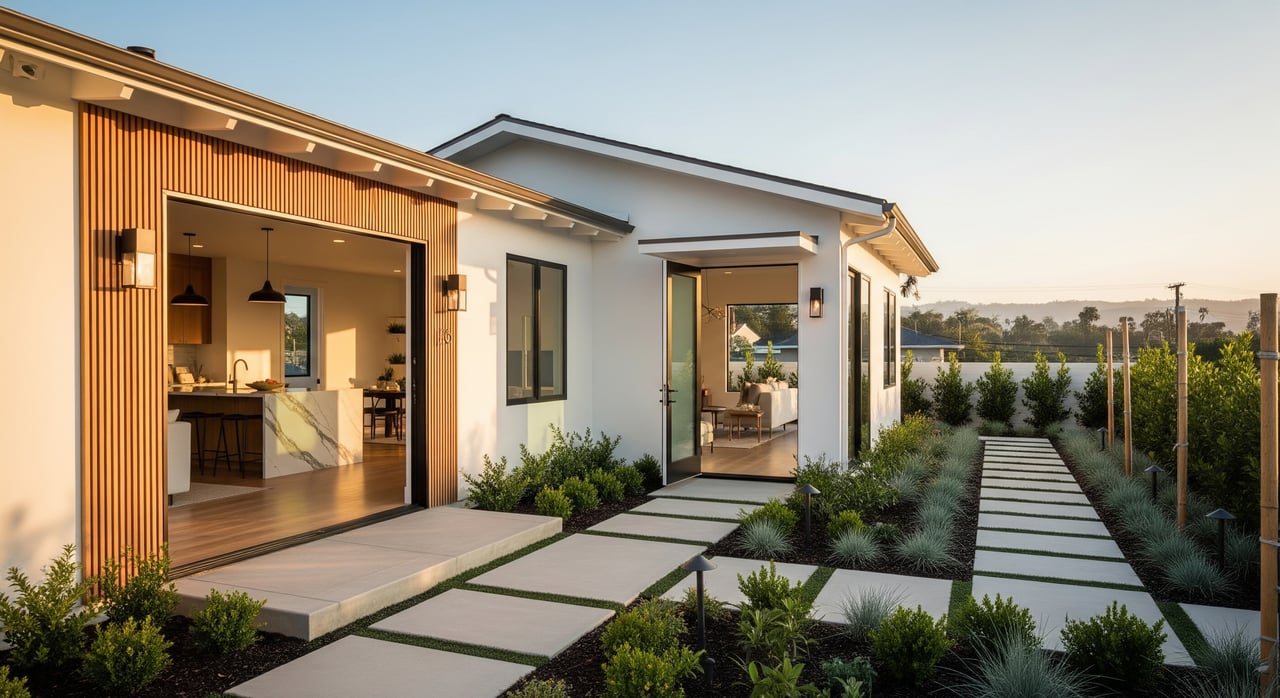
Buying your first home in Costa Mesa can feel exciting and a little overwhelming. You want coastal access, smart value, and a clear plan so you do not overpay or miss a good opportunity. In this guide, you will learn what you can buy, what it costs, how the offer process works, and how to protect yourself during inspections and escrow. Let’s dive in.
Costa Mesa at a glance
Costa Mesa sits just inland from Newport Beach and Huntington Beach, with quick access to the 405 and 55, John Wayne Airport, and South Coast Plaza. You get a lively dining and retail scene, mid-rise condos near South Coast Metro, and established single-family neighborhoods. Many first-time buyers look here for coastal proximity without beachfront premiums.
Demand is typically strong in entry-level price bands and near Newport Beach or South Coast Plaza. Inventory is tighter than national averages, so desirable listings can move fast, especially condos and modest single-family homes. Commutes are car-focused, and timing varies with direction and peak traffic.
What you can buy
You will see a range of homes across neighborhoods and ages. Your search will likely focus on:
- Condos and townhomes. Often the most accessible entry point with mid-century to newer communities.
- Single-family homes. From smaller ranch and bungalow styles to renovated mid-century properties and newer infill builds.
- Small multifamily or small-lot homes. Options for buyers who want potential rental income or future expansion.
- Newer infill projects. More limited inside city limits compared with inland suburbs, but some newer townhomes and condos exist near South Coast Metro.
Typical price ranges to expect
Price bands shift over time, so verify current numbers with recent MLS or C.A.R. data before you write an offer. As a general orientation:
- Condos and townhomes. Roughly mid-$400Ks to low-to-mid $900Ks, depending on size, condition, and proximity to Newport Beach or South Coast Plaza.
- Single-family homes. Smaller or older homes often start in the high $700Ks to $900Ks, with many in the $900K to $1.8M band. Premium locations or renovated homes can exceed $2M.
Use these as directional ranges, then dial in with active and sold comps as of the month you are shopping.
Neighborhood snapshots
- South Coast Metro and Eastside. Higher-density condos and newer townhomes with strong amenity access and pricing pressure near retail and the airport.
- Westside near Harbor Blvd. Mixed residential and commercial corridors, with values influenced by proximity to Newport Beach in certain pockets.
- Mesa Verde and interior areas. More single-family options with varying ages and renovation levels.
- Bridges and Adams corridors. Older inventory, including renovation opportunities and some tear-down candidates.
Keep your neighborhood lens neutral and practical. Focus on commute patterns, HOA rules, renovation scope, and recent comparable sales.
Timeline: from prep to keys
Every buyer’s timeline is different, but you can plan around these milestones.
Pre-purchase prep: 2 to 8 weeks
- Review your credit, debt-to-income, and budget with a lender.
- Get a full mortgage pre-approval. A pre-underwrite can strengthen your offer.
- Research neighborhoods, HOA structures and fees, commute times, and realistic price bands.
House-hunting and offers: weeks to months
- In competitive segments, be ready to tour and write quickly when a good property lists.
- In more balanced segments, expect a steadier pace with time to compare.
Escrow to closing: typically 30 to 45 days
- Inspection contingency. Commonly 7 to 10 days, but negotiable.
- HOA document review. Condos and townhomes need extra time for association documents.
- Appraisal and underwriting. Usually 1 to 2 weeks after opening escrow. Low appraisals can trigger negotiations or appraisal-gap planning.
What it really costs to buy
Create a realistic budget that covers upfront and ongoing costs.
- Down payment. FHA options typically allow 3.5% down if eligible. Some conventional programs start around 3% to 5% with mortgage insurance. Twenty percent down removes PMI.
- Closing costs. Plan for 2% to 5% of the purchase price for lender fees, title, escrow, recording, and prepaids.
- Property taxes. Orange County’s base rate is around 1% of assessed value. Some properties have added assessments or Mello-Roos that raise the total tax bill.
- HOA dues. Condos and townhomes vary widely, often from the low hundreds to $700+ per month depending on amenities and reserves.
- Insurance. Standard homeowners insurance plus optional earthquake coverage. Coastal proximity can affect maintenance and corrosion exposure.
- Maintenance. Budget 1% to 2% of home value per year for single-family homes. Condos shift some costs to the HOA, so review reserves and potential special assessments.
First-time buyer programs to explore
- CalHFA. State programs that can help with down payment or closing costs if you qualify.
- Local and county programs. Orange County and some cities periodically offer assistance. Availability changes, so check current options.
- Federal programs. FHA, VA, or USDA when eligible. USDA eligibility is uncommon this close to the coast.
Ask your lender to screen your eligibility early, then compare monthly payments and cash-to-close under each program.
Smart offer strategies in Costa Mesa
Sellers prioritize price and certainty. In multiple-offer situations, strong pre-approval, clean terms, and flexibility on timing can help.
- Escalation clauses. Useful when multiple offers compete, but set a clear cap that fits your budget.
- Appraisal-gap coverage. Effective in tight markets, but confirm you can fund the gap if the appraisal comes in low.
- Contingency decisions. Shortening timelines can help. Fully waiving inspection or financing increases risk, especially for first-time buyers.
- Earnest money and proof of funds. Larger deposits show commitment, but know the contract terms to protect your funds.
For condos, be ready to move quickly on HOA document reviews so your financing stays on track.
Inspections and due diligence
Protect your purchase with a thorough inspection plan, especially for older homes.
- General home inspection. Structure, roof, plumbing, electrical, and HVAC.
- Pest and termite. Standard in Southern California and often required.
- Sewer scope. Helpful in older neighborhoods where clay lines may be present.
- Moisture and corrosion checks. Salt air can accelerate metal corrosion and hidden moisture issues.
- Foundation review. Older slabs or pier-and-beam systems can have unique concerns. Ask your inspector for guidance.
For condos and townhomes, study HOA health:
- Minutes, reserve studies, and financials. Strong reserves reduce future special assessment risk.
- Insurance and litigation status. Active litigation or insufficient coverage can affect financing and costs.
Condos vs single-family: choosing your path
Condos often offer a lower purchase price and less direct exterior maintenance, but you will pay monthly dues and rely on HOA governance. Single-family homes give you more control and space to modify, but you shoulder more maintenance and repair costs. If you plan to hold long term, compare total monthly cost of ownership, including taxes, insurance, HOA dues, and a realistic maintenance reserve.
Risk management for coastal-adjacent buyers
- Insurance. Consider earthquake coverage in addition to standard homeowners insurance.
- Flood awareness. Check flood risk and discuss with your lender and insurance professional if a property sits in a lower-lying area.
- Renovation budgeting. For older homes, get quotes early for roofs, sewer, HVAC, and windows. Coastal exposure can change replacement timelines.
Practical next steps
- Get fully pre-approved with a lender and confirm down payment assistance options.
- Define your must-haves, budget, property type, and commute limits.
- Track new listings and sold comps so you understand pricing, days on market, and list-to-sale ratios.
- Tour open houses to learn how condition and HOA amenities affect pricing.
- Plan for inspections, including termite and sewer scope, and talk with a local contractor if a home needs updates.
When you are ready to move from research to results, connect with a local advisor who knows Costa Mesa micro-markets, HOA norms, and how offers really get accepted here. If you want a senior-level guide with legal and financing fluency by your side, reach out to Jules Granda to start a focused, low-stress plan.
FAQs
What price ranges should first-time buyers expect in Costa Mesa?
- Condos and townhomes often range from the mid-$400Ks to low-to-mid $900Ks, while many single-family homes run from about $900K to $1.8M with some higher; verify current comps before offering.
How long does it take to close on a home in Costa Mesa?
- Typical escrows run 30 to 45 days, with inspections in the first 7 to 10 days and appraisal and underwriting usually within 1 to 2 weeks.
What upfront costs will I pay besides the down payment?
- Budget 2% to 5% of the purchase price for closing costs, plus inspection fees, initial insurance, and moving expenses.
Is a condo or a single-family home better for a first purchase?
- Condos often offer a lower entry price but add HOA dues and association risk; single-family homes provide more control with higher maintenance responsibilities.
How competitive are offers in Costa Mesa right now?
- Entry-level segments and homes near Newport Beach or South Coast Plaza tend to be most competitive; speed and strong pre-approval help.
Should I waive inspection or financing contingencies to win?
- Generally no for first-time buyers; you can shorten timelines for a stronger offer while keeping essential protections in place.
