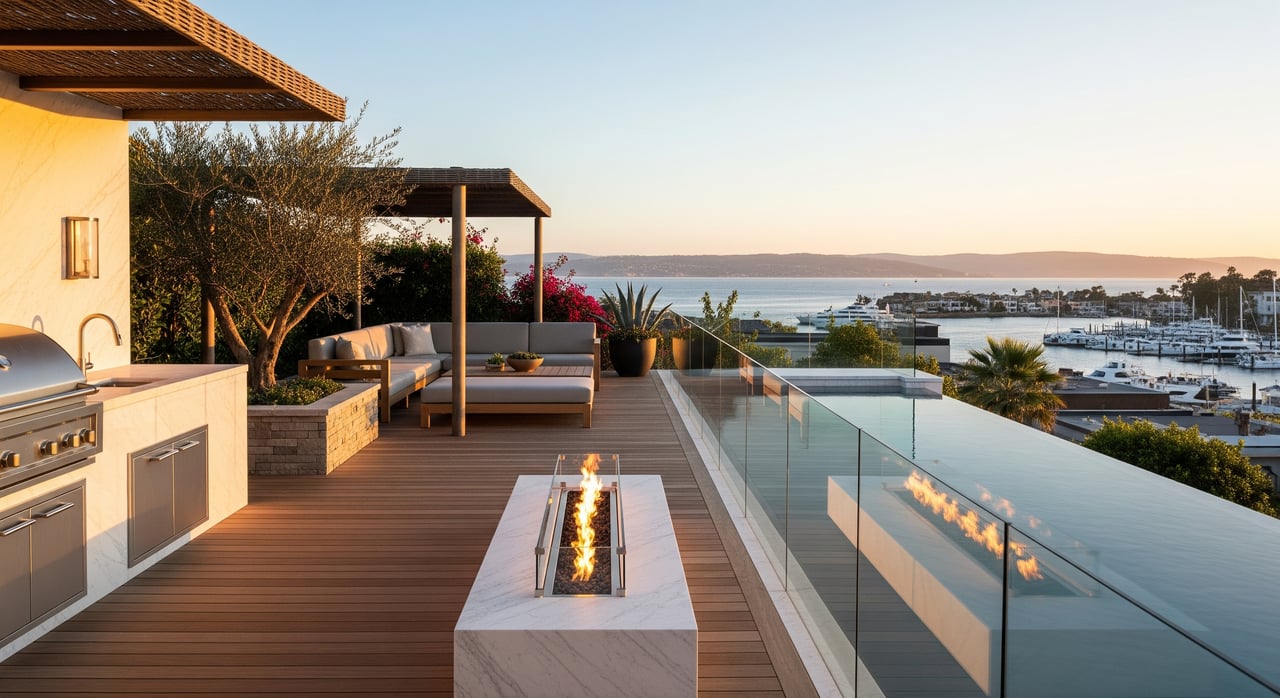
Salt air and sunshine make Newport Beach living special, but they also test your outdoor spaces. If you want a patio that looks great year-round or you are prepping your home for a top-tier sale, you need upgrades that can handle salt, wind, and strong UV. In this guide, you’ll learn which outdoor improvements work best in our coastal climate, what they typically cost, and how to prioritize for lifestyle and resale impact. Let’s dive in.
Design for Newport’s coast
Coastal conditions shape every decision. Salt accelerates corrosion, wind can stress shade structures, and year-round sun fades finishes. Plan with durability and maintenance in mind to protect your investment.
- Salt and humidity: Choose marine-grade metals and coatings. Ordinary hardware corrodes quickly near the water.
- Wind and exposure: Engineer roofed or freestanding shade for local wind loads. Pick UV-stable fabrics that will not fade.
- Permits and planning: Early conversations with the City of Newport Beach Building Division and, when near the shoreline, the California Coastal Commission can keep projects on track.
Choose marine-ready materials
You can reduce long-term upkeep by selecting materials designed for coastal environments from the start.
- Metals: Use 316 stainless steel for fasteners, hardware, and outdoor appliances. Powder-coated aluminum frames rated for coastal use perform well.
- Decking and hardscape: Consider capped composite decking for low maintenance and strong resistance to salt and UV. Concrete and porcelain pavers are durable alternatives. High-grade tropical hardwoods like ipe are an option if you are comfortable with more frequent sealing.
- Fabrics and finishes: Specify solution-dyed acrylics with mildew resistance for cushions and shade. Use UV-stable, marine-grade sealants and paints, and follow a recommended recoating schedule.
- Maintenance: Rinse metal surfaces with fresh water regularly, re-seal stone or wood as specified, and inspect stainless hardware for galvanic corrosion.
- Budget impact: Marine-grade choices usually cost about 10 to 30 percent more upfront but can lower your lifetime maintenance costs.
Create shade that sells
Shade structures make outdoor areas usable, comfortable, and photogenic. Choose the type that fits your lot, wind exposure, and budget.
- Retractable awnings: Flexible and cost-effective sun control. Typical installed cost is about $3,000 to $12,000 depending on size and motorization.
- Pergolas: Open or louvered designs add architecture and filtered shade. Custom wood pergolas often range from $8,000 to $30,000+. Permanent aluminum or motorized louver systems usually run $15,000 to $50,000+.
- Covered patios: A roofed patio that ties into the home can extend your living space. Expect $20,000 to $100,000+ depending on footprint, finishes, and utilities.
- Cabanas and pavilions: Freestanding structures create a resort feel on higher-end properties.
Resale insight: Covered spaces and well-integrated outdoor rooms usually attract buyers more than very light solutions. Roofed additions and engineered systems generally need permits and structural plans, which adds credibility at resale.
Maximize indoor-outdoor flow
Seamless connections can make your home feel larger and are a hallmark of coastal living in Newport Beach.
- Big openings: Multi-panel sliding or pocketing doors open living areas to patios and views. Typical cost ranges from $15,000 to $60,000+ depending on size, framing, and structural work.
- Level thresholds and flooring: Create a smooth transition and consider visually continuous flooring for an expansive feel. Patio leveling or paver extensions often run $5,000 to $30,000+.
- Lighting and power: Add wiring for ambient, task, and accent lighting, plus audio. Electrical upgrades commonly range from $2,000 to $15,000+.
Permitting and structure: New wide openings in load-bearing walls require permits and structural engineering. Safety glazing and energy code requirements may apply. Well-executed indoor-outdoor flow improves lifestyle and can strengthen buyer interest in coastal markets.
Plant low-water landscapes
Landscapes that handle salt, wind, and drought while looking polished can cut water use and show beautifully in photos.
- Plant palette: Consider California natives suited to coastal conditions such as ceanothus, Artemisia, and certain manzanitas, along with drought-tolerant ornamentals like agave, aeonium, coastal sages, rosemary, red yucca, and select ornamental grasses. Avoid invasive species and check local guidance.
- Water-smart irrigation: Drip or subsurface drip systems with smart controllers and soil moisture sensors reduce waste. Use mulch and permeable hardscape to limit evaporation.
- Turf strategies: Replace high-water lawns with synthetic turf or drought-tolerant groundcovers. Local water agencies sometimes offer rebates for turf removal and irrigation upgrades.
Typical costs: A drought-tolerant re-landscape for a mid-size lot often ranges from $8,000 to $50,000+ depending on hardscape, grading, and plant maturity. Irrigation upgrades and smart controllers typically range from $800 to $6,000. Professionally designed, low-maintenance landscapes often resonate with California buyers.
Cook, gather, and glow outdoors
Kitchens, fire features, and pools can elevate the experience and the way your property photographs.
- Outdoor kitchens: Use marine-grade appliances and 316 stainless in locations protected from direct salt spray. A built-in grill island often costs $8,000 to $25,000. A full kitchen with refrigeration, sink, counters, and built-ins can range from $25,000 to $100,000+.
- Fire features: Gas fire pits and linear burners photograph beautifully and are easier to manage than wood-burning options. Local air quality rules can restrict wood-burning; gas is often the simpler path for coastal luxury homes.
- Pools and spas: Expect significant build, maintenance, and insurance costs. Many backyard pools fall in the $70,000 to $200,000+ range, with high-end custom designs costing more.
Permits and safety: Outdoor kitchens with gas, electric, or plumbing, and all pools and spas, typically require permits and inspections. Pools must meet California safety requirements.
Resale note: These luxury amenities increase buyer appeal in high-end neighborhoods, but they do not always return full cost at sale. Design for timeless looks, integrated storage, and strong lighting for the best market impact.
Plan permits and professionals
A clear path through approvals and hiring keeps coastal projects moving and compliant.
- Key agencies: The City of Newport Beach Planning and Building Divisions handle zoning, setbacks, and permits. Projects within the coastal zone or near the shoreline can involve additional review with the California Coastal Commission. The South Coast Air Quality Management District influences wood-burning rules. Local water agencies and the Metropolitan Water District offer water-efficiency programs.
- Permit patterns: Small, unroofed improvements may not need permits. Roofed covers, structural openings, pools, spas, and any work with gas, electrical, or plumbing usually require permits and inspections. Confirm HOA design guidelines where applicable.
- Contractor selection: Verify license, insurance, and bond with the California Contractors State License Board. Ask for coastal project references and request written specs that call out corrosion-resistant materials like 316 stainless and coastal-grade coatings. Seek itemized, fixed-price bids when possible.
- Timelines: Minor upgrades like landscape refreshes or awning installs can wrap in 1 to 4 weeks. Covered patios, structural door openings, outdoor kitchens, and pools often take months, including permit review and inspections. Seasonal demand in Orange County can extend schedules.
Prioritize ROI before you sell
Every property and buyer pool is different, so match your plan to the neighborhood and price tier.
- Good: Refresh landscaping with a clean, drought-tolerant palette and smart irrigation. Add layered outdoor lighting, rinse away salt residue, and replace faded fabrics with solution-dyed acrylics.
- Better: Add a retractable awning or a well-detailed pergola to create a defined outdoor room. Improve floor continuity at the threshold for a wider visual connection.
- Best: Invest in a permitted covered patio or a multi-panel door system where appropriate. These improvements often create strong listing photos and can help premium homes command better results.
If you are weighing a custom pool or full outdoor kitchen purely for resale, compare that spend to enhancements that showcase indoor-outdoor flow, lighting, and low-maintenance landscaping. In many cases, those deliver strong marketability at a lower cost.
Prep for luxury photos
Strong visuals help buyers feel the lifestyle the moment they see your listing.
- Stage outdoor rooms: Show defined functions like dining, lounging, or cooking with uncluttered, weather-appropriate furniture.
- Time your lighting: Dusk photos with warm, even lighting and clean flames on fire features read as refined and inviting.
- Protect view corridors: Remove visual clutter so sightlines to water or sky remain open. Include a few close-up detail shots of quality materials.
- Pro production: Use photographers who can handle bright coastal skies and, if appropriate, drone imagery that highlights orientation and proximity to the beach within local guidelines.
Maintenance after the upgrade
Coastal performance improves when you plan for care from day one.
- Rinse schedule: Fresh-water rinse metals and glass regularly to remove salt.
- Protective cycles: Re-seal stone and wood as specified by product and exposure.
- Hardware checks: Inspect stainless fasteners and hardware for signs of galvanic corrosion and replace as needed.
- Irrigation tune-ups: Adjust smart controllers seasonally and verify drip emitters are clear.
A simple written maintenance plan can reassure future buyers and help preserve value.
Let’s map your next step
Choosing the right mix of improvements depends on your location, exposure to salt and wind, and your goals for lifestyle or resale. If you want a clear, property-specific plan that fits your budget and timeline, reach out to Jules Granda for a consult. You will get practical guidance, contractor referrals with coastal experience, and a marketing strategy that showcases your outdoor living at its best.
FAQs
What outdoor upgrades fit Newport Beach’s climate?
- Choose 316 stainless and powder-coated aluminum, capped composite or pavers for decks, UV-stable fabrics, and shade engineered for wind and sun.
How much do shade structures cost in Newport Beach?
- Retractable awnings run about $3,000 to $12,000, wood pergolas $8,000 to $30,000+, louvered aluminum systems $15,000 to $50,000+, and covered patios $20,000 to $100,000+.
What are smart low-water landscaping moves?
- Use coastal-tolerant natives and drought-friendly plants, drip or subsurface irrigation with smart controllers, mulch, and permeable hardscape for lower water use.
Do large sliding doors require permits?
- Yes, cutting new wide openings usually needs permits and structural engineering, with safety glazing and energy code requirements to address.
Are outdoor kitchens and pools worth it for resale?
- They elevate appeal in higher-end neighborhoods but do not always return full cost; compare them to lower-cost upgrades that boost indoor-outdoor flow and curb appeal.
