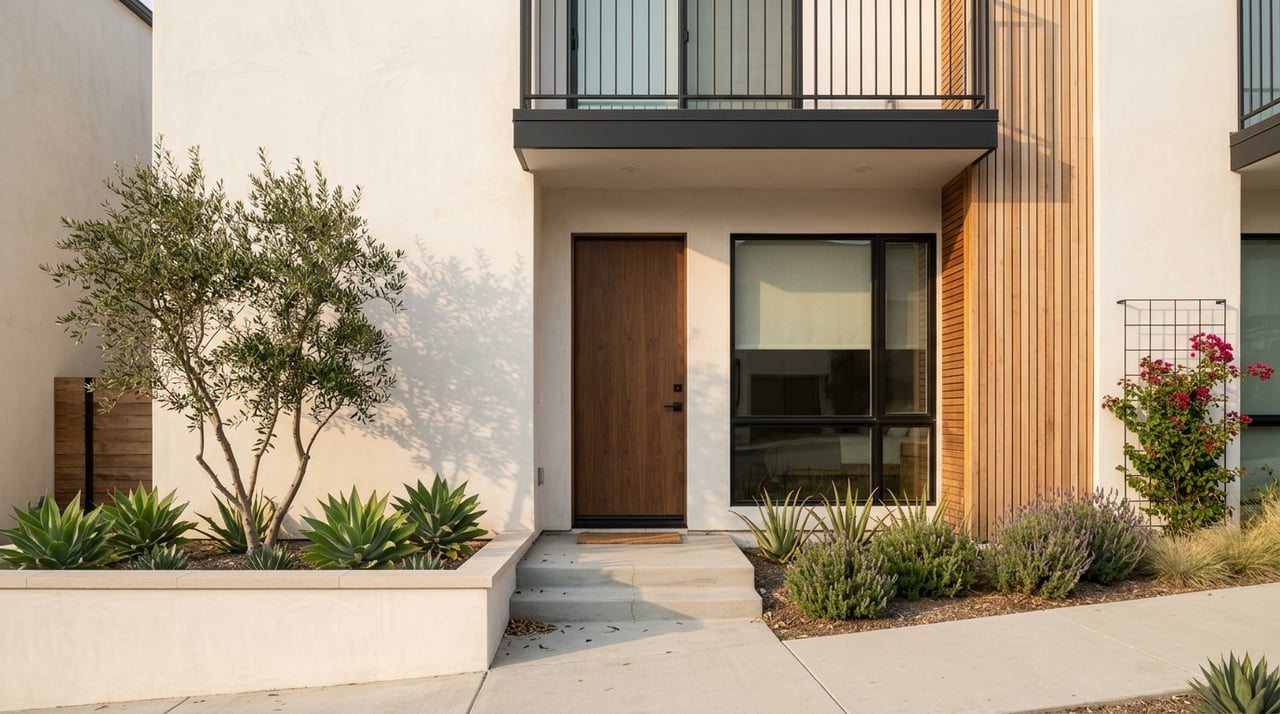
If you are looking at investment property in Tustin, the sticker price only tells part of the story. In a high-cost Orange County market, the better question is not just Can you buy it? but How will this property perform once real numbers hit the page? If you want to compare single-family homes, condos, and townhomes with more confidence, this guide will help you focus on the factors that matter most. Let’s dive in.
Why Tustin deserves a careful review
Tustin is not a one-note housing market. The city’s housing mix includes detached homes, attached homes, small multifamily properties, larger multifamily properties, and mobile homes, which means investors have more than one path to consider depending on budget, risk tolerance, and long-term goals.
The baseline numbers also show why discipline matters. Tustin had an estimated 2024 population of 78,863, with 26,698 households, a 50.9% owner-occupied rate, a median owner-occupied home value of $890,600, and a median gross rent of $2,340. Using the citywide median rent and value, the rough gross rent-to-value ratio is about 3.15%.
That 3.15% figure is a useful screening benchmark, but it is not a deal analysis. In a market like Tustin, where both rents and values are relatively high, small mistakes in taxes, HOA costs, or reserves can change your return quickly.
Start with a property-specific pro forma
Before you compare property types, build a simple pro forma for each listing. This gives you a clearer picture of monthly carrying costs and helps you avoid relying on appreciation alone.
At a minimum, your model should include:
- Mortgage payment
- Property taxes
- Insurance
- HOA dues, if applicable
- Vacancy allowance
- Repairs and maintenance
- Property management
- Reserve funds for future expenses
In Orange County, property taxes are not always as simple as the current listing suggests. The Orange County Assessor notes that tax bills can include the 1% basic levy plus bonded indebtedness, special assessments, or Mello-Roos assessments tied to the parcel.
The Assessor also notes that new owners may receive supplemental assessments. That means your first-year cash flow may look different from the seller’s current tax bill, so it is important to underwrite from your ownership cost, not theirs.
Compare Tustin property types carefully
Single-family homes in Tustin
A detached home often offers the most flexibility, but it also places more of the cost burden directly on you. You are generally evaluating not just the home itself, but also the lot, future use options, and the full expense stack.
One of the biggest upside questions for a Tustin single-family investment is whether the property may support additional income potential over time. Tustin allows ADUs and JADUs on lots with legally developed single-family or multifamily dwellings, and the city says an ADU can be attached or detached.
The city also states that a studio or one-bedroom ADU can be up to 850 square feet, while an ADU with two or more bedrooms can be up to 1,200 square feet. That does not mean every lot will qualify in the same way, but it does mean some detached-home purchases may offer future rental flexibility beyond the main house.
What to review for a detached home
When you evaluate a single-family property, look beyond the kitchen finishes or staging. Focus on practical questions like these:
- Does the lot layout appear to support future ADU potential?
- What will your property taxes and insurance look like after closing?
- Are there deferred maintenance items that will affect reserves?
- Does the property fit your rental strategy now and your resale strategy later?
In many cases, detached homes win on flexibility rather than simplicity. They can provide more room for lot-based value creation, but you also carry more direct responsibility for upkeep and future capital expenses.
Condos in Tustin
Condos can offer a lower entry point than detached homes, and some investors like the more limited exterior maintenance burden. Still, condos require deeper project-level due diligence because your ownership is tied to a common-interest development.
In California, the Department of Real Estate says public reports disclose important items such as CC&Rs, costs, and assessments for maintaining homeowners associations and common areas. That means your investment decision should include more than just unit condition and rent potential.
Project financeability matters too. Fannie Mae notes that condo eligibility can be affected by critical repairs, inadequate insurance, pending significant litigation, and transient-rental characteristics. Those issues can affect financing, resale liquidity, and your buyer pool when it is time to exit.
What to review for a condo
Before you move forward on a condo, review:
- Monthly HOA dues
- HOA budget and reserve strength
- Insurance coverage
- Any known major repairs
- Pending litigation or other project issues
- Rules that may affect leasing or occupancy
A condo may look simple on the surface, but weak reserves or rising assessments can change the economics fast. In Tustin, where the gross yield benchmark is already modest, those costs deserve close attention.
Townhomes in Tustin
Townhomes can be especially tricky because the visual style does not tell you the legal ownership structure. In California, the Department of Real Estate says “townhome” is an architectural term, not a legal one.
That means one townhome may be structured as a condominium, while another may be part of a planned development. From an investment standpoint, the legal form matters because it affects maintenance responsibility, assessments, project review, and financing.
California Civil Code section 4775 states that, unless the declaration says otherwise, the association is responsible for repairing, replacing, and maintaining the common area, while the owner is responsible for the separate interest. Exclusive-use areas can involve split responsibility between the owner and the association.
Why title documents matter for townhomes
When you evaluate a townhome, do not rely on the listing description alone. Instead, review the title documents and CC&Rs to understand:
- What you own directly
- What the HOA maintains
- Whether exclusive-use areas create shared obligations
- How assessment risk may affect your monthly cost
- Whether financing may be more complex than expected
A townhome may feel like a house in daily use, but it can carry condo-like obligations behind the scenes. That is why underwriting the legal structure is just as important as underwriting the property itself.
Don’t overlook rental-law assumptions
If you plan to rent out the property, your underwriting should account for California’s Tenant Protection Act. The California Attorney General says the law created statewide rent and just-cause protections.
The Civil Code also provides exemptions for some single-family homes and condominiums when statutory conditions are met and required notice is given. For investors, the key takeaway is simple: your ownership structure, entity setup, and lease documentation can affect the rent-growth assumptions you use.
That is one more reason not to apply a one-size-fits-all model to every Tustin listing. Two similar-looking properties may operate under very different practical rules depending on how they are owned and leased.
Think about long-term supply and resale
A good investment decision is not only about today’s payment. You also want to think about future competition, flexibility, and buyer demand when you eventually sell.
Tustin is actively shaping future housing supply. The city’s Housing Element Rezone Project says the City Council approved the project on January 7, 2025, and that Tustin Legacy will absorb 855 additional residential units plus 1,356 buffer units.
The city also states that the Tustin Legacy Specific Plan envisions more than 9,000 housing units at completion, including detached homes, attached homes, multifamily housing, and more than 975 affordable units. For investors, this means future supply is a real consideration, especially when comparing properties based on uniqueness, location within the city, and long-term resale flexibility.
A simple framework for comparing options
If you are deciding between a detached home, condo, or townhome in Tustin, this quick framework can help.
| Property Type | Main Advantage | Main Watchout |
|---|---|---|
| Detached home | More lot-based flexibility and possible ADU potential | Higher direct expense responsibility |
| Condo | Potentially simpler exterior upkeep | Higher sensitivity to HOA dues, reserves, insurance, and project issues |
| Townhome | Can offer a house-like layout at a different price point | Legal structure may create condo-like obligations |
The best option is usually not the one with the lowest asking price. It is the one that best balances entry cost, monthly carrying costs, tax exposure, HOA structure, and future resale options.
How to evaluate a Tustin listing with confidence
When you narrow your shortlist, keep your process grounded in the numbers. In a market like Tustin, a clean-looking listing can still underperform if the taxes, dues, reserves, or project conditions are not aligned with your goals.
A disciplined review can help you avoid common investor mistakes, especially when comparing very different property types. It can also help you identify where a detached home offers future flexibility, where a condo carries hidden project risk, or where a townhome needs deeper document review.
If you want a practical second opinion on a Tustin investment property, Jules Granda brings a calm, numbers-aware approach backed by deep transaction experience across Orange County and Southern California.
FAQs
What is the basic rent-to-value benchmark for Tustin investment properties?
- Using Tustin’s median gross rent of $2,340 and median owner-occupied value of $890,600, the rough gross rent-to-value ratio is about 3.15%, which is only a starting point for screening deals.
What should you include in a Tustin investment property pro forma?
- Your pro forma should include mortgage payment, property taxes, insurance, HOA dues if any, vacancy, repairs, management, and reserve funds for future costs.
Why do Tustin condo investment properties need extra due diligence?
- Condo investments require review of HOA dues, reserves, insurance, CC&Rs, major repairs, litigation exposure, and project financeability because those factors can affect both cash flow and resale.
What should you check before buying a Tustin townhome as an investment?
- You should confirm the legal ownership structure, review title documents and CC&Rs, and understand which maintenance and repair obligations belong to you versus the HOA.
Can a Tustin single-family investment property have ADU potential?
- Tustin allows ADUs and JADUs on lots with legally developed single-family or multifamily dwellings, and the city states size limits depend on bedroom count and configuration.
Why can first-year taxes look different on a Tustin rental property?
- The Orange County Assessor notes that new owners may receive supplemental assessments, and parcel-specific charges can include bonded indebtedness, special assessments, or Mello-Roos in addition to the basic levy.
